Anti Doping
ISMF Anti-Doping Program
Message from ISMF President, Regula Meier
The use of banned substances or methods to enhance performance is fundamentally wrong and contradicts the very essence of ski mountaineering. Our sport is rooted in endurance, respect for nature, and the pursuit of excellence through fair competition. Any misuse of drugs not only endangers an athlete’s health but also compromises the safety and integrity of others on the mountain. It damages the image and values of ski mountaineering, regardless of intent.
Here you can find links to the ISMF Anti-Doping Rules which are in compliance with the Latest WADA and ITA standards. You can also consult our annual Anti-Doping Report here
To safeguard integrity and fairness, a commitment to a clean field of play is essential. The International Ski Mountaineering Federation (ISMF) is dedicated to preserving the credibility of our sport through a comprehensive anti-doping program. This program emphasizes education and prevention, rigorous testing, and the application of sanctions for those who violate the rules. These measures ensure that the spirit of True Ski—honesty, resilience, and respect for the environment—remains at the heart of ski mountaineering.
Together, let us protect the values that define our sport and ensure a future where our integrity and clean competition becomes a model for the world to follow.
Regula Meier
President
International Ski Mountaineering Federation


Introduction
The ISMF promotes True Ski by adopting and implementing the World Anti-Doping Code as established by the World Anti-Doping Agency (WADA). ISMF ensures that all member associations, athletes, and Athlete Support Personnel comply with the World Anti-Doping Code and its associated International Standards, including requirements for the Registered Testing Pool (RTP), Whereabouts obligations, and the management of Anti-Doping Rule Violations (ADRVs).
Awareness and education for athletes, entourage and all individuals having a role in administration, competition and sport science is an integral part of the ISMF guidelines regarding clean sport. All national members, teams and sports organisations are encourages to use the following education resource containing detailed information of structuring education programs and values based education: Guidelines for the 2021 International Standard for Education (ISE)
The Global Anti-Doping Landscape
The Global Anti-Doping Landscape
The World Anti-Doping Agency is the independent international body responsible for harmonizing anti-doping policies across all sports and countries. World Anti-Doping Code is the core document that ensures consistency in anti-doping rules and regulations worldwide. The Code is supported by eight International Standards, including the Prohibited List, which is updated annually.
The International Ski Mountaineering Federation (ISMF) has its own set of Anti-Doping Rules, under the project True Ski, which is fully aligned with the Code and International Standards. It is essential that all athletes, Athlete Support Personnel, and Member Associations are familiar with these rules.
ISMF has delegated the management of its testing, results management, and education activities to the International Testing Agency (ITA), an independent organization that administers anti-doping programs on behalf of International Federations and Major Event Organizers.
WADA, ISMF, the ITA, and National Anti-Doping Organizations (NADOs) work together to coordinate all anti-doping efforts within the sport of ski mountaineering.
ISMF Anti-Doping Program Focus
ISMF Anti-Doping Program Focus
The ISMF anti-doping program is designed to protect the integrity of ski mountaineering and uphold the principle of True Ski. It combines education, monitoring, and enforcement to ensure a fair and safe sporting environment. The key pillars of our program are:
- Education and Prevention – Promoting values-based learning and awareness to foster a strong clean sport culture among athletes and support personnel.
- Testing and Investigations – Conducting in-competition and out-of-competition testing in line with the International Standard for Testing and Investigations (ISTI).
- Results Management and Sanctions – Applying fair and transparent procedures to address Anti-Doping Rule Violations (ADRVs) and enforce appropriate consequences.
- Member Association Support – Assisting national federations in meeting their obligations under the World Anti-Doping Code, international standards, and relevant national legislation.
Principles And Values Associated With Clean Sport
Principles and Values Associated with Clean Sport
In association with WADA (World Anti-Doping Agency) and ITA (International Testing Agency), the ISMF is dedicated to complying with world Clean Sport rules and helping to educate and inform ski mountaineering athletes and coaches about its importance and how to effectively follow Clean Sport requirements.
The use of doping substances or doping methods to enhance performance is fundamentally wrong and is detrimental to the spirit of sport. ISMF strongly refuses every illicit use of medical products to improve the athletic performance.
The discipline of ski mountaineering at the same time promotes and is based on the fundamental values of the Olympic Movement. Above all, the spirit of ISMF is particularly enhanced by the following principles and values:
- Respect between athletes, officials, referees and spectators.
- Politeness.
- Loyalty.
- Sportsmanship.
- Observance of the rules.
If you have any anti-doping queries, please contact anti-doping@ismf-ski.org.
Rights And Responsibilities Under The Code
Rights And Responsibilities Under The Code
Athletes and Athlete Support Personnel have rights under the Code, including equal opportunity, fair testing programs, right to education, and data protection. They also have responsibilities: comply with ISMF Anti-Doping Rules, take full responsibility for substances in their body (Strict Liability), cooperate with testing and investigations, and avoid prohibited association.
For details, refer to the Athletes’ Anti-Doping Rights Act at the following link: https://www.wada-ama.org/en/resources/athletes-anti-doping-rights-act
To protect the integrity of ski mountaineering and uphold the principle of True Ski, all athletes and Athlete Support Personnel must also understand and fulfill their anti-doping responsibilities.
These include:
- Knowing and and following ISMF Anti-Doping Rules and any other applicable rules in case of multi-sport events.
- Taking full responsibility for what enters your body—ensuring no prohibited substance or method is used.
- Informing medical professionals that you are subject to anti-doping regulations before accepting any treatment.
- Cooperating fully with ISMF, WADA, the International Testing Agency (ITA), and National Anti-Doping Organizations (NADOs) during testing and investigations.
- Being available for sample collection at any time, in- or out-of-competition.
- Avoiding prohibited association—do not work with coaches, trainers, physicians, or other Athlete Support Personnel who are ineligible due to an Anti-Doping Rule Violation (ADRV) or criminal conviction related to doping. WADA prohibited association list here
Athlete are required to be aware of the Anti Doping Control Process
Apart from Athletes, Athlete Support Personnel under ISMF jurisdiction share responsibility for protecting clean sport.
Key obligations include:
- Know and follow ISMF Anti-Doping Rules and any other applicable regulations.
- Promote clean sport values—use your influence to foster integrity and anti-doping attitudes.
- Comply with all anti-doping policies relevant to you and the athletes you support.
- Cooperate fully with ISMF, WADA, ITA, and NADOs during testing and investigations.
- Disclose any past Anti-Doping Rule Violations (ADRVs) within the last ten years to ISMF and your NADO.
- Avoid prohibited association—do not work with individuals sanctioned for doping.
The Principle Of Strict Liability
The Principle Of Strict Liability
Athletes are responsible for any prohibited substance found in their samples, regardless of intent. If it is in the athlete’s body, the athlete is responsible for it. Athletes must be familiar with the latest Prohibited List, which is updated at least once per year : https://www.wada-ama.org/en/prohibited-list and be informed on the risks of supplement use, described below.
Anti-Doping Rule Violations
Anti-Doping Rule Violations
Doping is defined as the occurrence of one or more of the following Anti-Doping Rule Violations (ADRVs) in line with Code Art. 2 (Anti-Doping Rule Violations):
- Presence of a prohibited substance in an Athlete’s sample
- Use or attempted use of a prohibited substance or method
- Refusal to submit to sample collection after being notified
- Failure to file Athlete Whereabouts information & missed tests
- Tampering with any part of the doping control process
- Possession of a prohibited substance or method
- Trafficking a prohibited substance or method
- Administering or attempting to administer a prohibited substance or method to an Athlete
- Complicity in an ADRV
- Prohibited association with sanctioned Athlete Support Personnel
- Discourage or Retaliate other Persons from reporting relevant Anti-Doping information to the authorities.
Current Doping Violations

Provisional suspension with relevant communication on 28/02/2025:
Consequences of Anti-Doping Rule Violations and Doping
An athlete runs very high risks by consuming doping substances or by using prohibited methods. This may result in very severe health but also financial, legal and social consequences. The athletes’ consequences of doping could spell the end of sporting career, reputation, and future prospects both in and out of sport.
An Athlete’s or other Person’s violation of an anti-doping rule may result in one or more of the following:
- Disqualification means the Athlete’s results in a particular Competition or Event are invalidated, with all resulting Consequences including forfeiture of any medals, points and prizes.
- Ineligibility means the Athlete or other Person is barred on account of an anti-doping rule violation for a specified period of time from participating in any Competition or other activity or funding as provided in Article 10.14.
- Provisional Suspension means the Athlete or other Person is barred temporarily from participating in any Competition or activity prior to the final decision at a hearing conducted under Article 8.
- Financial Consequences means a financial sanction imposed for an anti-doping rule violation or to recover costs associated with an anti-doping rule violation. As regards high-performance sport, anti-doping rules often leads to a loss of income, the reimbursement of prize moneys and of the sponsorship money.
- Public Disclosure means the dissemination or distribution of information to the general public or Persons beyond those Persons entitled to earlier notification. Teams in Team Sports may also be subject to Consequences.
- Medical Consequences: Physical health: depending on the substance, the dosage, and the consumption frequency, doping products may have particularly negative side effects on health. Some damages for the body are irreversible and may lead that the athlete’s life be in great danger.
- Psychological health: some doping substances may not be detrimental to the body but exercise an impact on mental health. It was scientifically evidenced that anxiety, obsessive disorders, or psychosis are direct consequences from doping. More info can be find https://www.wada-ama.org/sites/default/files/resources/files/WADA_Dangers_of_Doping_EN.pdf
- Social Consequences: The existence of an athlete who was held guilty for doping may be completely disrupted. Doping may also be prejudicial to the fame, respect, and creditworthiness. Even future negative findings are regularly questioned by the media and the entourage. The poor image will remain in the collective unconscious and the athlete will remain isolated. Further to these sanctions, an athlete who has been found guilty of an Anti-Doping Rule Violation is often exposed to a level of media attention that can result in permanent damage to their reputation.
Substances And Methods On The Prohibited List
Substances and Methods on the Prohibited List
The World Anti-Doping Agency (WADA) produces a list of substances and methods that are banned in sport in the form of the Prohibited List. It is updated at least annually, with the new list taking effect on January 1 of each year.
It is important that athletes and Athlete Support Personnel are familiar with the Prohibited List and know how to check whether medications are prohibited in sport.
A substance or method can be added to the Prohibited List if it meets at least two of the following three criteria:
- It has the potential to enhance or enhances sport performance.
- Use of the substance or method represents an actual or potential health risk to the athlete.
- Use of the substance or method violates the spirit of sport.
The Prohibited List includes substances and methods that are categorised into three groups:
- Substances and methods prohibited at all times
- Substances and methods prohibited in-competition
- Substances prohibited in particular sports
According to the Code, the in-competition is the period commencing at 11:59 p.m. on the day before a Competition in which the Athlete is scheduled to participate through the end of such Competition and the Sample collection process related to such Competition
The in-competition period is very important to understand when it relates to substances that are prohibited in-competition. When a substance is prohibited in-competition, it must leave the athlete’s system by the time the said competition begins. It does not mean that the athlete must stop taking the substance by the time the in-competition period begins. Different substances take different amounts of time to leave the system – athletes must be extremely careful to make sure that they are not caught with a positive test as a result of taking a substance prohibited in-competition.
Prohibited Lists
Use Of Medications & Risks Of Supplements Use
Checking Medications
The Global Drug Reference Online (Global DRO) is recommended to check all medications prior to use. Global DRO provides athletes and Athlete Support Personnel with information about the prohibited status of specific medications based on the current World Anti-Doping Agency (WADA) Prohibited List.
Here are a few tips and tricks to help athletes and Athlete Support Personnel navigate the Prohibited List and to be able to select medications that are safe to take within the context of sport:
- Only the medical ingredient names are listed on the Prohibited List – not the brand names
- Always check dosage restrictions, route administration of the medicine and any limitations for the use of the drug based on gender
- Check both over-the-counter and prescription medications before using them
- Inform your medical professional that you are an athlete and subject to anti-doping regulations
- Different substances take different amounts of time to leave your system – take that into account when taking substances prohibited in-competition
- Be careful when substituting one brand of medication for another – they may contain different medical ingredients
- Be careful when travelling – the same brand of a medication may contain different medical ingredients abroad
- Regularly check for updates to the Prohibited List
Risks of Supplements
Extreme caution is recommended regarding supplement use. A number of positive tests have been attributed to the misuse of supplements, poor labelling or contamination of dietary supplements, and there is no guarantee that a supplement is free from prohibited substances.
Risks of supplements include:
- Manufacturing standards, which are often less strict compared with medicines. These lower standards often lead to supplement contamination with an undeclared prohibited substance;
- Fake or low-quality products which may contain prohibited substances – and be harmful to health;
- Mislabelling of supplements with ingredients wrongly listed and prohibited substances not identified on the product label;
- Misleading and false claims that a particular supplement is endorsed by Anti-Doping Organisations or that it is “safe for athletes”. Anti-Doping Organisations do not certify supplements.
All athletes should do a risk-benefit assessment if they are considering the use supplements. The first step of such an assessment is to consider whether a “food-first” approach meets the athlete’s needs. Whenever possible, such assessment should be done with a support of a certified nutritionist or other qualified professional who is familiar with the global and ISMF anti-doping rules.
Checking Supplements
If, after careful consideration, an athlete chooses to use supplements, they must take the necessary steps to minimise the risks. This includes:
- Thorough research on the type and dose of the supplement, preferably with the advice of a certified nutritionist or other qualified professional who is familiar with the global and ISMF anti-doping rules.
- Selecting only those supplements that have been batch-tested by an independent company. Companies that batch-test supplements include Informed Sport, Certified for Sport or Kölner Liste.
Remember, no supplement is 100% risk-free but athletes and Athlete Support Personnel can take certain steps to minimise these risks.
For more information, please watch this ITA webinar on nutritional supplements.
Therapeutic Use Exemptions (TUEs)
Therapeutic Use Exemption (TUE)
Athletes may have illnesses or conditions that require them to take medications or undergo procedures. If the medication or method an athlete is required to use to treat an illness or condition is prohibited as per the World Anti-Doping Agency’s (WADA) Prohibited List a TUE may give that athlete the authorization to use that substance or method while competing without invoking an anti-doping rule violation (ADRV) and applicable sanction. Applications for TUEs are evaluated by a panel of physicians, the TUE Committee (TUEC).
What are the criteria for granting a TUE?
All of the four following criteria must be met (for more details, please refer to the WADA International Standard for Therapeutic Use Exemptions (ISTUE) Article 4.2):
- The athlete has a clear diagnosed medical condition which requires treatment using a prohibited substance or method;
- The therapeutic use of the substance will not, on the balance of probabilities produce significant enhancement of performance beyond the athlete’s normal state of health;
- The prohibited substance or method is an indicated treatment for the medical condition, and there is no reasonable permitted therapeutic alternative;
- The necessity to use that substance or method is not a consequence of the prior use (without a TUE), of a substance or method which was prohibited at the time of use.
Who should apply for a TUE? Where and when to apply?
Athletes who are subject to anti-doping rules would need a TUE to take a prohibited substance or use a prohibited method. You should verify with ISMF to know to whom you need to apply and if you can apply retroactively.
Please visit the following link for further information regarding TUEs: WADA TUE Guidelines
Testing Procedures
Testing Procedures
The aim of testing is to protect clean athletes through the detection and deterrence of doping.
Any athlete under the testing jurisdiction of the ISMF may be tested at any time, with no advance notice, in- or out-of-competition, and be required to provide a urine, blood sample or blood for a Dried Blood Spot (DBS) analysis.
Athletes can be tested by ITA, NADOs or Major Event Organisers. For more information on ISMF’s collaboration with the ITA, please visit International Ski Mountaineering Federation (ISMF) – International Testing Agency
What to expect during the Doping Control Process
The doping control process is clearly defined by the World Anti-Doping Agency. This means that no matter where and when an athlete is tested, the process should remain the same.
The key steps of the doping control process are listed out in this Doping Control resource prepared by the International Testing Agency (also available in Arabic (عربى), Chinese (中文), French (français), German (deutsche), Italian (italiano), Japanese (日本語), Korean (한국어), Portuguese (português), Russian (русский) and Spanish (español).
To learn more about the doping control process, please watch this ITA webinar on urine and blood sample collection.
Rights & Responsibilities during Sample Collection
Athletes have a number of rights and responsibilities during sample collection.
Athlete rights during sample collection are to:
- Have a representative accompany them during the process
- Request an interpreter, if one is available
- Ask for Chaperone’s/Doping Control Officer’s identification
- Ask any questions
- Request a delay for a valid reason (e.g., attending a victory ceremony, receiving necessary medical attention, warming down or finishing a training session)
- Request special assistance or modifications to the process
- Record any comments or concerns on the Doping Control Form
Athlete responsibilities during sample collection are to:
- Report for testing immediately if selected
- Show valid identification (usually a government-issued ID)
- Remain in direct sight of the Doping Control Officer or Chaperone
- Comply with the collection procedure
Athlete Biological Passport (ABP)
The Athlete Biological Passport (ABP) was introduced in 2009 and is a pillar method in the detection of doping. It is an individual electronic profile that monitors selected athlete biological variables that indirectly reveal the effects of doping. ABP is integrated directly into ADAMS.
If you wish to learn more about ABP, you can watch this ITA webinar recording.
The 11 steps of the doping control of urine testing procedure
- Athlete Selection
- Notification
- Reporting to the Doping Control Station
- Selection of a Collection Vessel
- Provision of Sample
- Volume of Urine
- Selection of a Sample Collection Kit
- Splitting the Sample
- Sealing the Samples
- Measuring Specific Gravity
- Completion of the Doping Control Form
Athletes can be selected for doping control at any time and any place.
1. Athlete Selection
2. Notification
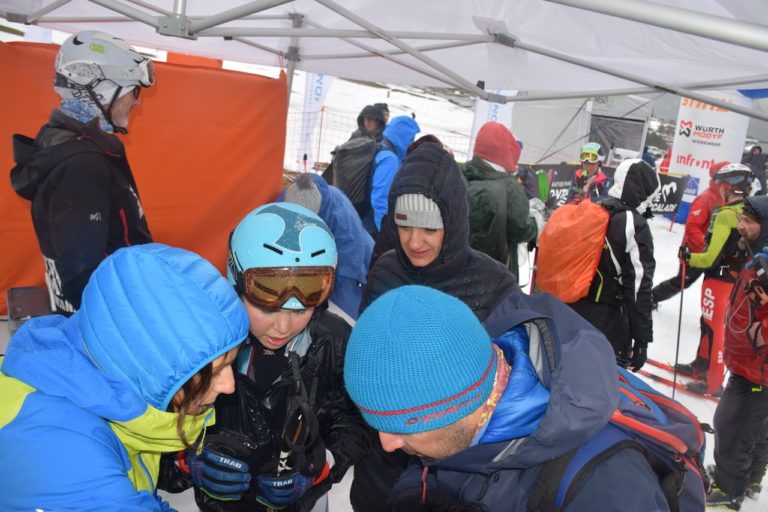
A Doping Control Officer (DCO) or chaperon will notify the Athlete that he has been selected for doping control. The DCO (Doping Control Offficier) or chaperon will inform the Athlete of his rights and responsibilities. These include the right to have a representative present throughout the process. The Athlete will be asked to sign a form confirming that he has been selected for doping control.
3. Reporting to the Doping Control Station
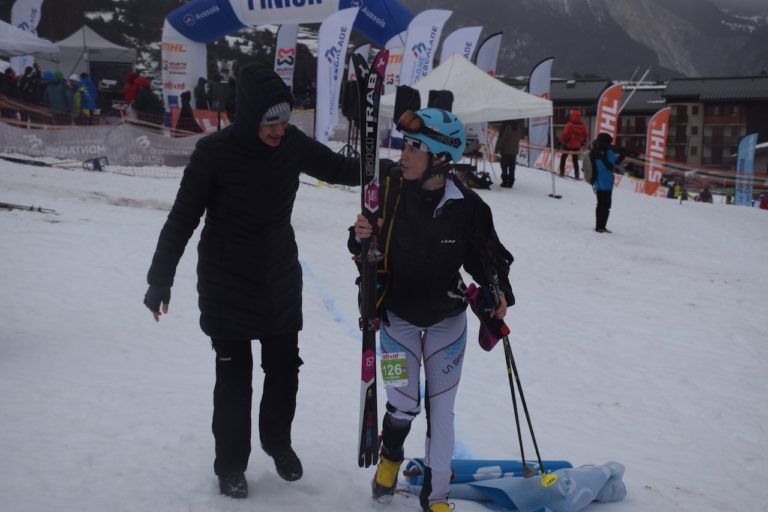
Athlete should report immediately to the doping control station. The DCO or chaperon may allow the Athlete to delay reporting to the station for an activity such as a news conference or to complete a training session. However, once the Athlete has been notified and selected for doping control, the DCO or chaperone will accompany him until the completion of the sample collection process. The DCO may allow a delay in reporting for a valid reason.
4. Selection of a Collection Vessel
Athlete will be given a choice of individually sealed collection vessels. Athlete may select one. Athlete should verify that the equipment is intact and has not been tampered with. Athlete should, at all times, maintain control of the collection vessel.
5. Providing a Sample
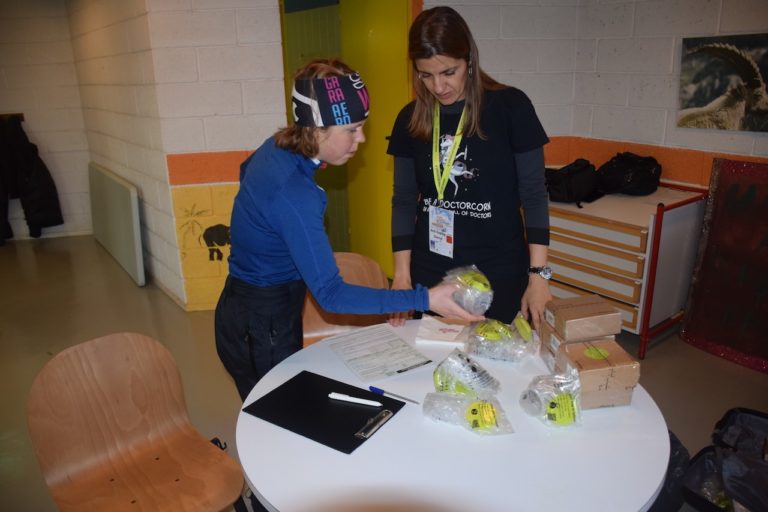
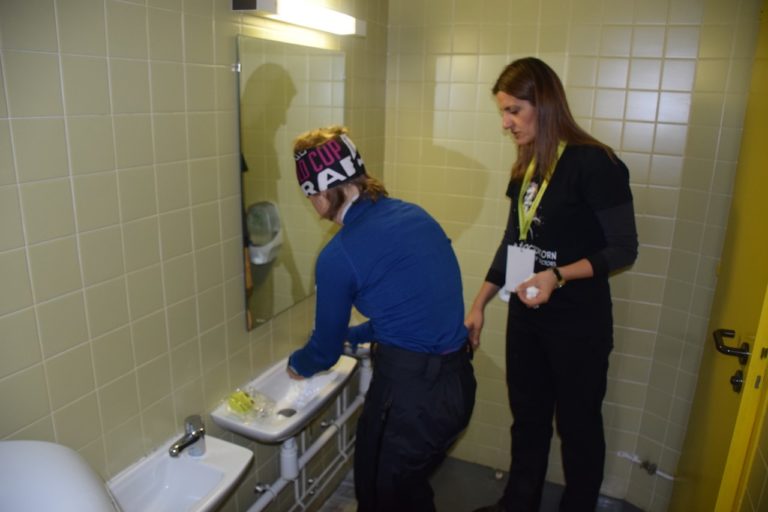
During the sample provision, only the Athlete and the DCO or chaperon of the same gender are permitted in the washroom. The Athlete will be asked to wash hands. The Athlete will then be asked to raise or lower clothing so that the DCO or chaperon has an unobstructed view while the Athlete provides the sample. Athlete and DCO must inspect the equipment and verify the sample code numbers.
6. Volume of Urine
The DCO shall ensure, with the Athlete in full view, that he provided the minimum required volume of 90 mL. If at first the Athlete is unable to provide 90 mL, he will be asked to provide more until that level is met.
7. Selection of Sample Collection Kit
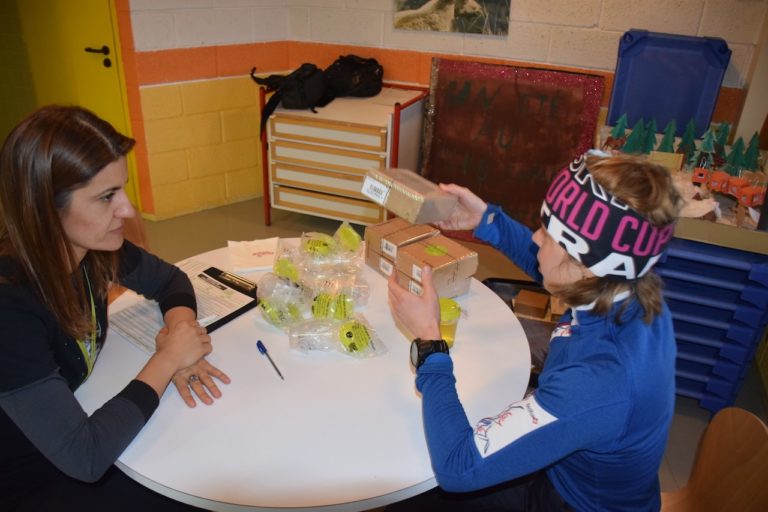
Athlete will be given a choice of individual sealed sample collection kits to choose one. Athlete should verify the equipment is intact and has not been tampered with and open the kit. Confirm the sample code numbers on the bottles, the lids and containers all match.
8. Splitting the Sample
The Athlete will split the sample, pouring at least 30 mL into the B bottle and the remaining urine of 60 ml or more into the A bottle. Athlete will be asked to leave a small amount in the collection vessel. The reason for this is so the DCO can measure its specific gravity. Athlete should pour the urine unless he needs help. In this instance, Athlete will need to provide consent of his representative or the DCO to pour on his behalf.
9. Sealing the Sample
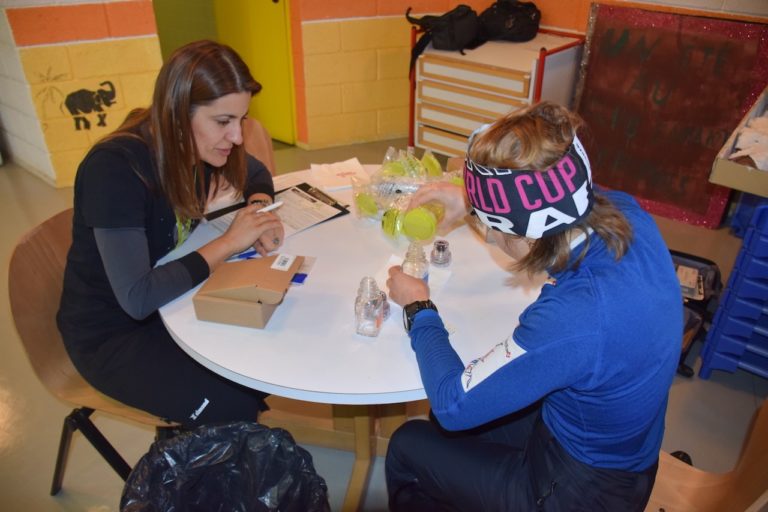
Next, seal both the A and B bottles. Athlete and the DCO should verify that the bottles are sealed properly.
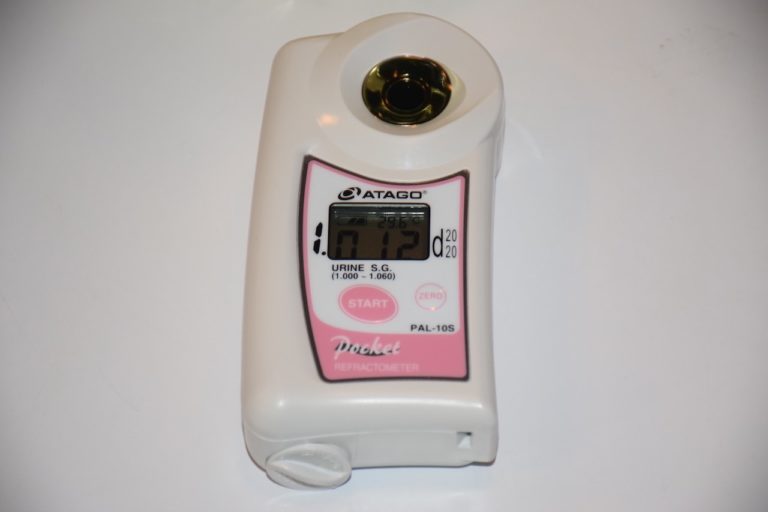
10. Measuring Specific Gravity
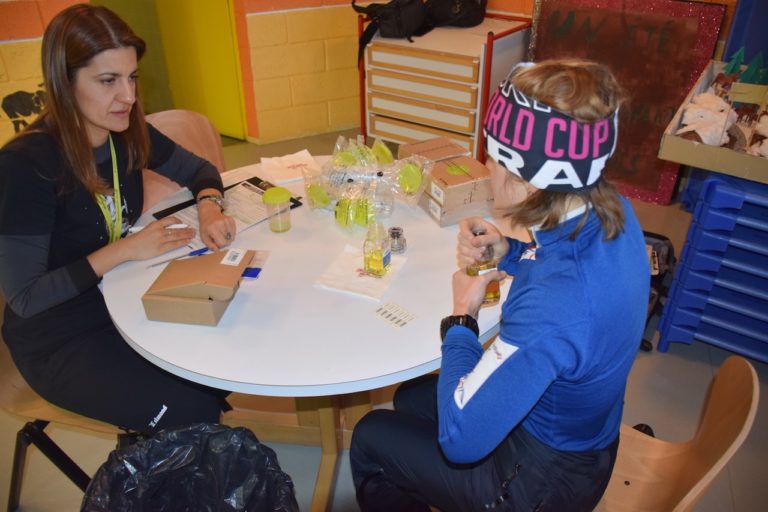
The DCO is required to measure the sample‚ specific gravity. If it does not meet certain requirements, Athlete will be asked to provide another sample.
11. Completing the Doping Control Form
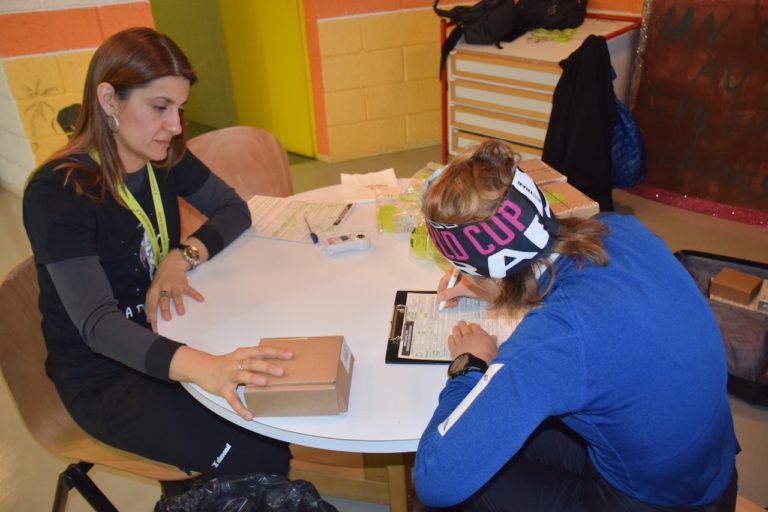
Athlete will be asked for consent that sample could be used anonymously for research once the analysis for doping control purposes is completed. Athlete may say yes or no.
Athlete should be absolutely certain everything is correct, including the sample code number and to be sure, too, that the laboratory copy of the form does not include any information that could identify Athlete.
Athlete will be asked to sign the form.
At the completion of collection, Athlete will receive a copy of the doping control form.
On this form, Athlete should provide information about any medication, prescription or non-prescription or dietary supplements the Athlete has taken recently. This form is also the place to note any comments Athlete may have regarding any part of the doping control process.
Blood testing procedure
Steps for blood testing procedure is the same as for urine until the point where athlete should check kits for blood doping control. Athletes should choose and inspect the security kits, vacutainer tubes, and accessory kits to ensure they have not been tampered with and are not defective. Security kits contain the security bottles used to transport blood sample to the lab; vacutainer kits include the vacutainer tubes for the collection of blood; and accessory kits contain the butterfly needle, straight needle, and other after-care supplies. Athletes should also check the contents of the security kits to confirm the sample code numbers on the bottles and labels match. Athletes should remove the shrink wrap from the bottles. The lids should be placed on the table with the sanitation cover down. Depending what kind of blood analyses is required, athlete will need to be seated at least 10 minutes before the blood is taken.
BCO will begin the blood collection process by selecting a location on the athlete’s skin from where to draw the blood and cleaning the area with a sterile disinfectant swab. The BCO will apply a tourniquet to aid in the collection, and the BCO will begin to draw the blood sample. A blood draw will be attempted a maximum of three times. The BCO will label each tube with the corresponding sample code number for the security bottles, confirming with the athlete. The DCO will direct the BCO to place the lids on the bottles and twist once. The athlete will then twist the lids on the bottles until secure. The DCO will guide the athlete through the remaining paperwork corresponding to the blood collection session.
The Laboratory process
Athlete samples are packed for shipping by a secure process.
Athlete samples are sent to a WADA-accredited laboratory. When processing samples, that lab will adhere to the International Standard for Laboratories, ensuring the chain of custody is maintained. A sample is analyzed. B sample is securely stored. It may be used to confirm an Adverse Analytical Finding from the A sample. The lab will report the results of the Athlete’s sample analysis to the responsible Anti-Doping Organization and to WADA.
Laboratories analyse samples solely by code numbers, not by athletes names. A laboratory that has analysed an athlete’s A sample reports the results simultaneously to WADA and to the particular Anti-Doping Organization.
Adverse Analytical finding
If an Athlete’s A sample reports a positive result or in the language of the Code, an Adverse Analytical Finding, the organization responsible for results management will conduct an initial review.
That review is focused on two parts:
- Does the Athlete have a Therapeutic Use Exemption for the substance found in the sample?
- Was the sample collection and analysis done according to procedures?
Athlete will be notified in writing of the results and rights regarding the analysis B sample.
If an Athlete requests a B sample analysis, or if the Anti-Doping Organization requests a B sample analysis, the Athlete may attend or choose to send a representative on his behalf.
In the meantime, a Provisional Suspension must be imposed when an A sample returns an Adverse Analytical Finding due to a Prohibited Method or for a Prohibited Substance other than a Specified Substance. At the same time, the Code grants the Athlete important hearing rights, should the Athlete choose to exercise them, in connection with the imposition of such a suspension. These opportunities can depend on the timing of an individual case.
If the B sample confirms the analysis of the A sample, the Anti-Doping Organization will proceed with the results management process, including the Athlete’s right to a fair hearing.
If the B sample does not confirm the analysis of the A sample, no further action will be taken and any Provisional Suspension will be lifted.
Requirements Of The Registered Testing Pool
Registered Testing Pool
The Registered Testing Pool (RTP) is the pool of highest-priority athletes established separately at the international level by the ISMF and at the national level by National Anti-Doping Organisations.
Athletes included in the ISMF RTP are subject to both in-competition and out-of-competition testing as part of the test distribution plan and are therefore required to provide Whereabouts information as provided in Code Art. 5.5 (Athletes Whereabouts Information) and the International Standard for Testing and Investigations.
The ISMF updates the composition of the RTP on a regular basis. Athletes are included in the RTP based on a set of criteria and are notified by the ISMF and ITS upon inclusion.
Inclusion in the RTP is done via the ISMF Inclusion Letter – this document contains all
Whereabouts Requirements
RTP Athletes must regularly provide whereabouts and contact information in ADAMS, WADA’s online anti-doping administration and management system. This information helps Anti-Doping Organisations with testing jurisdiction over the athlete to plan out-of-competition testing.
The Whereabouts requirements include but are not limited to:
- An up-to-date mailing address and phone number
- One daily specific 60-minute time slot between 5am and 11pm when the athlete is available and accessible for testing
- Athlete’s overnight accommodation for each day
- Information about training and regular activities that are part of the athlete’s regular routine (training at the gym, regular physio sessions, school, work, etc.)
- Competition, training and travel schedule
- Any additional relevant information that helps the Doping Control Officer locate the athlete (e.g., buzzer number or directions to a remote location)
Submitting late, inaccurate or incomplete whereabouts information may result in a Filing Failure.
An athlete may receive a Missed Test if they are not available for testing during the 60-minute timeslot indicated in ADAMS. Three Whereabouts Failures (any combination of a Filing Failure and a Missed Test) occurring within a 12-month period will lead to an Anti-Doping Rule Violation and a potential two-year ban from sport.
It is important to note that under the Principle of Strict Liability, the athlete remains responsible for the information submitted, even if they have delegated this task to a member of their support team.
Below are some helpful whereabouts tips for athletes:
- Set a calendar reminder of the key dates/deadlines to submit quarterly Whereabouts information
- Set an alarm for the start of the 60-minute time slot
- Be as specific as possible when submitting your Whereabouts information
- When in doubt, ask for help via the ADAMS Help Centre
- Make use of the Athlete Central app to submit your Whereabouts information on a mobile device
Retirement and Return to Competition
All international level athletes who decide to retire from competition must inform by emailing the ITA, the ISMF and their NADO. For RTP/TP Athletes, as soon as the retirement is officially confirmed to the ITA, the athlete will be immediately withdrawn from the RTP. The ITA will send a written communication to acknowledge that this information has been received
If the athlete then wishes to return to competition, this athlete cannot compete in international or national events until they have given six months prior written notice to the ITA, ISMF, and their NADO (Code Art. 5.6: Retired Athletes Returning to Competition).
Consequences Of Doping
Consequences of Anti-Doping Rule Violations and Doping
There are many risks associated with doping. From negative effects on mental and physical health, to loss of sponsorship or prize money, to permanent damage to an athlete’s image and relationships, it is important to understand and consider all consequences of doping. Below is a list of some of the common consequences of not competing clean.
Health
The use of Performance-enhancing Drugs (PEDs) may have long- and short-term impacts on the Athlete’s physical and mental health. Depending on the substance, the dosage and the duration of use, some PEDs have been proven to have severe side effects and can cause irreversible damage to an athlete’s body. In addition to the physical aspects, scientific research has shown that there is a considerable correlation between the use of PEDs and mental health issues. Most commonly, it was found that the use of doping substances can trigger anxiety, obsessive disorders or psychosis.
Social
Being associated with doping or a doping offence will have an impact on the person’s reputation and social relations. In the public view, Athletes or other persons convicted of doping are often considered “cheaters” and experience many forms of stigma. Doping has a significant negative impact on the person’s private life and social interactions as people may feel that they no longer want to be connected to someone who has damaged the reputation of a sport and displayed poor judgement.
Financial
A ban resulting from an Anti-Doping Rule Violation (ADRV) will have a significant financial impact on the individual. For athletes, this includes, but is not limited to, the requirement to return prize money or a financial sanction. Other negative consequences of doping include termination of contracts and sponsorship deals, loss of government funding and other forms of financial support.
Sanctions
An Anti-Doping Rule Violation (ADRV) will have an impact on an athlete’s ability to train and compete. For coaches and other Athlete Support Personnel, a ban may mean that they are no longer able to work with athletes. A sanction resulting from an ADRV can range from a warning to a lifetime ban from all sport. It is also important to note that individuals banned in the sport will also be prohibited from playing, coaching or working with athletes in any other capacity in a different sport. It is also a violation of the Code to work with Athlete Support Personnel who have been sanctioned by an ADO, as well as any coaches, trainers, physicians or other Athlete Support Personnel who are ineligible on account of an ADRV, or those who have been criminally convicted or professionally disciplined in relation to doping. A full list of sanctioned athletes and Athlete Support Personnel in the can be found below in accordance with Code Art. 14.3 (Public Disclosure)
Table of Sanctions
Ongoing ADRV investigations and sanctions can be found in the following table accessible here .
A full list of all Athlete Support Personnel who are currently suspended from working with athletes or other persons can be found on WADA’s Prohibited Association List.
Clean Sport Education
Anti-Doping Education
Education remains a cornerstone of our anti-doping strategy and is vital to ensuring compliance with the World Anti-Doping Code and related international standards. To deliver this effectively, we have partnered with the International Testing Agency (ITA), reflecting a significant investment in safeguarding the integrity of sport.
ITA provides structured, Code-aligned education programs that clearly outline the obligations, rights, and responsibilities of athletes and their support personnel under anti-doping regulations. These programs are designed to mitigate risk by promoting informed decision-making and preventing inadvertent rule violations.
Our commitment to this initiative reinforces the principle that clean sport is non-negotiable. All stakeholders must operate within a framework of transparency, accountability, and regulatory compliance.
We implement a comprehensive education strategy through multiple channels. All our education programs are showcased in the ”News” section of our website:
Monthly Webinars (ITA-led)
- Delivered by ITA and communicated to all national members via email.
- To receive updates, please email office@ismf-ski.org with the subject line: Anti-Doping Webinar.
Annual Sport-Specific Webinar
- Targeted for all national members and athlete entourage.
- Focused on ski mountaineering-specific anti-doping requirements.
Annual IF Webinar Series
- Designed for all stakeholders in ski mountaineering.
- Information is shared via email and published on the ISMF website.
On-Site Education at Events
- Conducted at least once per year at an ISMF calendar event.
- Delivered by an ITA Ambassador to ensure direct engagement with athletes and support personnel.
Monitoring of RTP Athlete Education
- ISMF monitors the education progress of athletes in the Registered Testing Pool (RTP) through ITA.
- This ensures compliance and continuous education for elite athletes.
Additional Recommended Education Resources
In addition to the education programs outlined above, we strongly recommend the following globally recognized resources to ensure all stakeholders remain up to date at any time:
Revealing Suspicious Activiy
Revealing Suspicious Activity
Protecting the integrity of ski mountaineering requires everyone to play their part. If you suspect doping or have information related to anti-doping violations, you have a responsibility to report it.
ISMF provides a secure and confidential way to share concerns. You can report through:
- REVEAL, the International Testing Agency’s (ITA) anonymous reporting platform
- Or directly via email: anti-doping@ismf-ski.org
All reports are treated seriously and handled in strict confidence. Information submitted through REVEAL will be shared with ISMF for investigation and may also support ITA’s intelligence and investigations work.
By speaking up, you help protect clean athletes and uphold the values of True Ski.
Data Privacy
Resources and Links (ITA, WADA, REVEAL, ETC)
Key resources and documents
ISMF Anti-Doping Rules
From 17 November 2022:
ADEL: The global Anti-Doping Education and Learning platform by WADA
ADEL courses for athletes:
- Privacy and Information Security Awareness for Athletes
- Athlete’s Guide to the 2021 Code
- At-a-Glance: Athlete Whereabouts
- At-a-Glance: Therapeutic Use Exemptions (TUE)
- At-a-Glance: Anti-Doping Overview
- Dried Blood Spot (DBS) Testing – The Basics
- Factsheet – Glucocorticoid Injections
- ADEL for International-Level Athletes
- Guide to the List 2023
- ADEL for National-Level Athletes
- ADEL for Registered Testing Pool Athletes
- Welcome to Sport Values
- Respect
- Equity
- Inclusion
- ADEL for Talented Level Athletes
- Recertification course for International-Level Athletes/National Level-Athletes
ADEL courses for athlete support personnel:
- ADEL for High Performance Coaches
- Factsheet for Medical Professionals – Glucocorticoid Injection
- ADEL for Medical Professionals
- ADEL for Medical Professionals at Major Games
- ADEL for Parents of Elite Athletes
- Athlete Support Personnel Guide to the Code 2021
- Sport Values in Every Classroom
WADA Documents
- World Anti-Doping Code (Code)
- International Standard for Testing and Investigations (ISTI)
- International Standard for Laboratories (ISL)
- International Standard for Therapeutic Use Exemptions (ISTUE)
- International Standard for the Protection of Privacy and Personal Information (ISPPPI)
- International Standard for Code Compliance by Signatories (ISCCS)
- International Standard for Education (ISE)
- International Standard for Result Management (ISRM)
- The List of Prohibited Substances and Methods (List) / 2025 Prohibited List (2026 Prohibited List)
- Athletes’ Anti-Doping Rights Act(Act)
Contact Information
Further contacts
For any further information and questions in relation to personal information practices, please contact the ITA at privacy@ita.sport or the ISMF.
If you have a doubt as regards to which organization you should apply for a TUE, or as to the recognition process, or any other question about TUEs, please contact: tue@ita.sport.