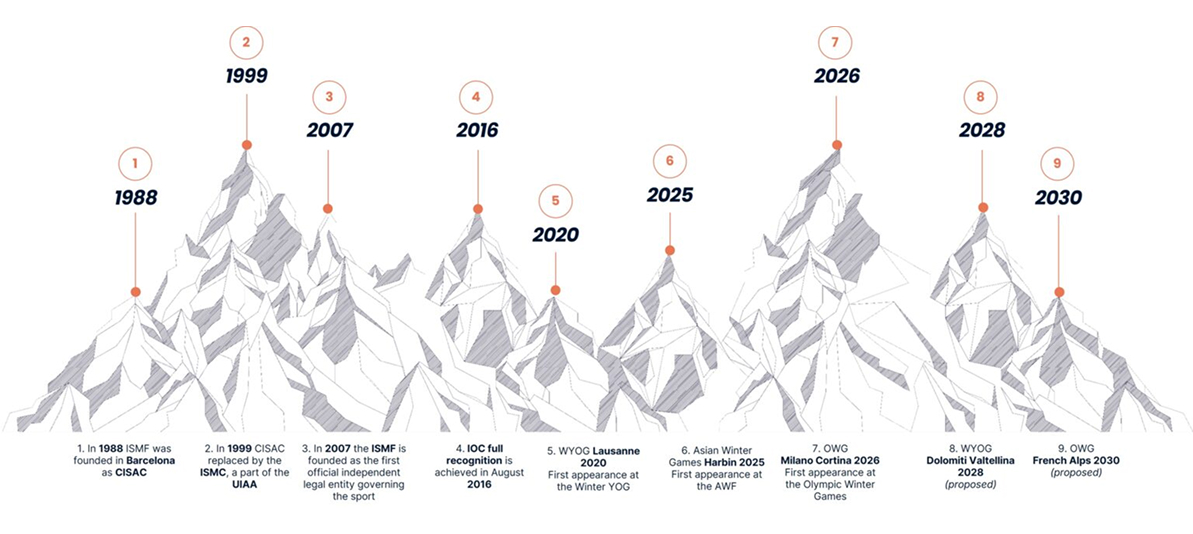
The International Ski Mountaineering Federation (ISMF), founded in 2007 and headquartered in Lausanne, Switzerland, is the global governing body for ski mountaineering.
Recognised by the International Olympic Committee (IOC) since 2016, the ISMF represents 55 national federations across four continents, overseeing the regulation, promotion, and commercial development of the sport.
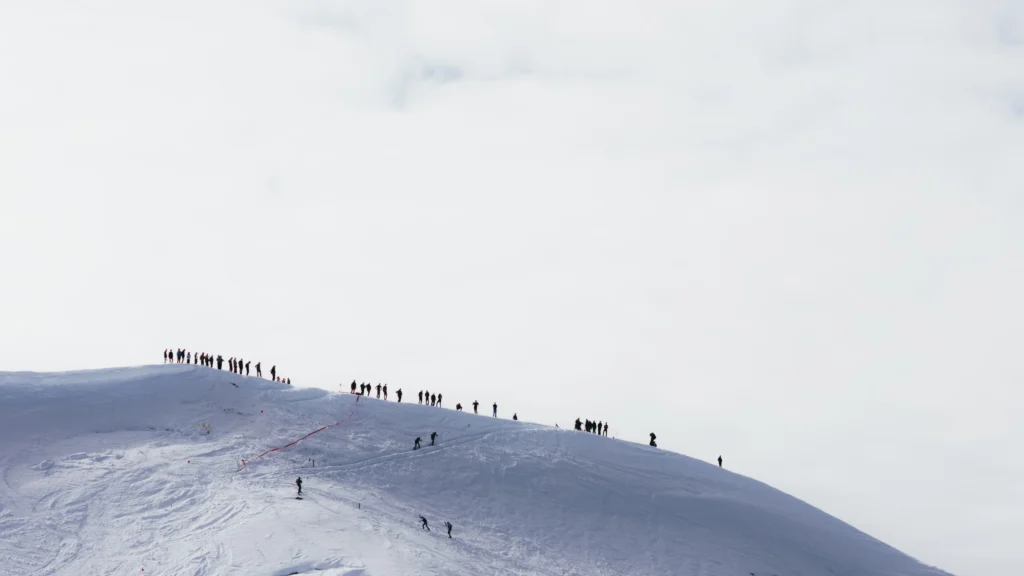
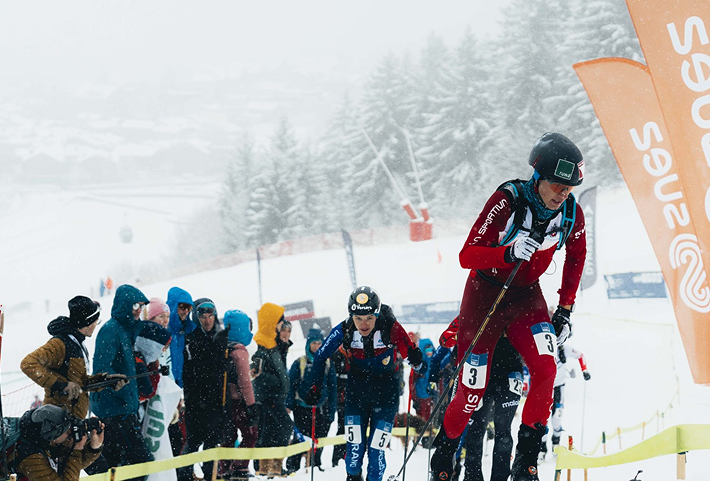
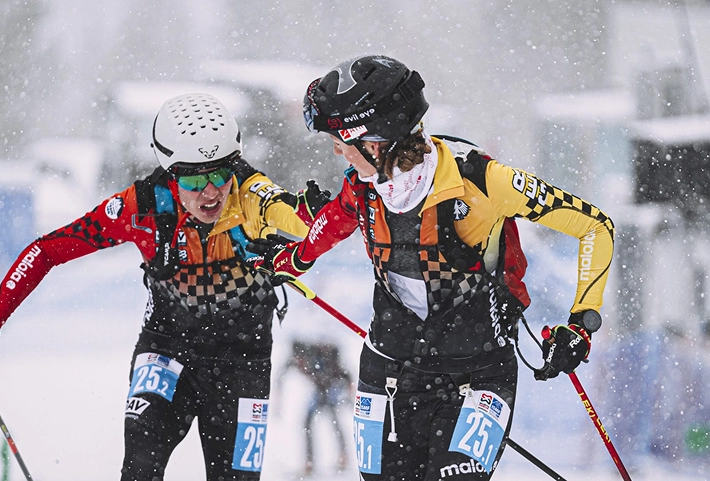
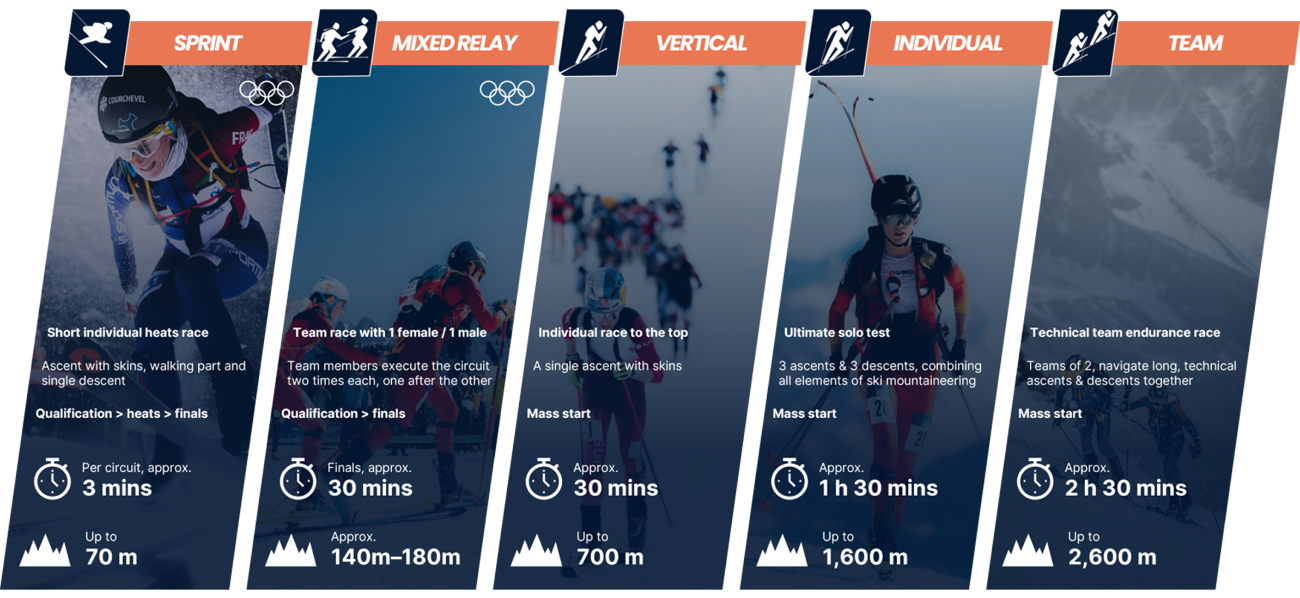
Ski mountaineering is a dynamic winter discipline that blends endurance, technical skill, and alpine adventure. Firmly established within mountain culture, it features a diverse competition programme, from the high-intensity Sprint and Mixed Relay to the endurance-driven Individual, Vertical, and Team races.
Athletes are at the heart of the ISMF’s mission, and working together with national federations, event organisers, and international bodies, ISMF strengthens athlete pathways and provide opportunities for progression from youth to elite levels.
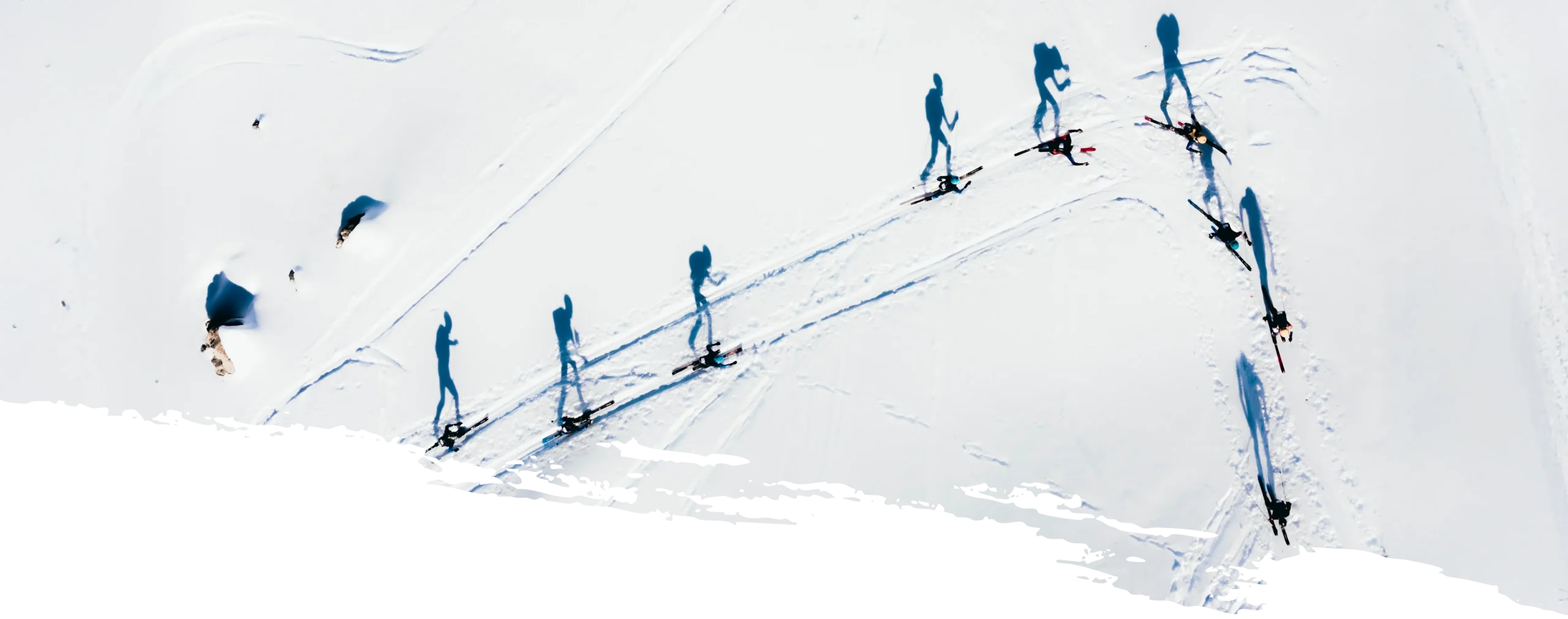
As a sport, ski mountaineering has evolved out prehistoric man’s necessity to move over hilly and mountainous terrain in an effective way during the snowy winter months. Archaeologists have discovered images that depict figures moving across snow on what appear to be wooden skis, and paintings from the Middle Ages indicate the use of ‘skins’ for snow covered ascents. Originally, these were animal skins which at the beginning of the twentieth century were usually seal skins. However, now they are synthetic. In the very earliest ski competitions, there seemed to be little difference between the equipment used for uphill, downhill and cross country. Of course, that has now changed and all the ski disciplines have very distinct identities and equipment, and even within ski mountaineering itself there are now different disciplines that require different abilities from the athlete. However, the ethos remains the same – to be able to move over snowy, mountainous terrain powered only by the energy of the athlete.
Every year, there are local and national circuits in the countries which have the right geography and weather, such as countries in the Alps, Pyrenees, North America, South America, Russia, Scandinavia, China, Korea and Japan, just to name a few.
There are distinct regional/continental circuits which are part of the ISMF calendar, as well as an annual World Cup circuit, with Continental and World Championships taking place on alternate years.
Ski mountaineering is a dynamic and fast-growing winter sport that reflects the evolving values of sport and society. It offers a unique blend of physical endurance, technical skill, and alpine adventure, with deep roots in mountain culture and a strong focus on sustainability, inclusivity, and innovation.
With low infrastructure demands, ski mountaineering creates value across multiple dimensions:
Ski mountaineering’s evolution reflects the changing landscape of winter sport—more sustainable, more inclusive, and more connected to both people and place.
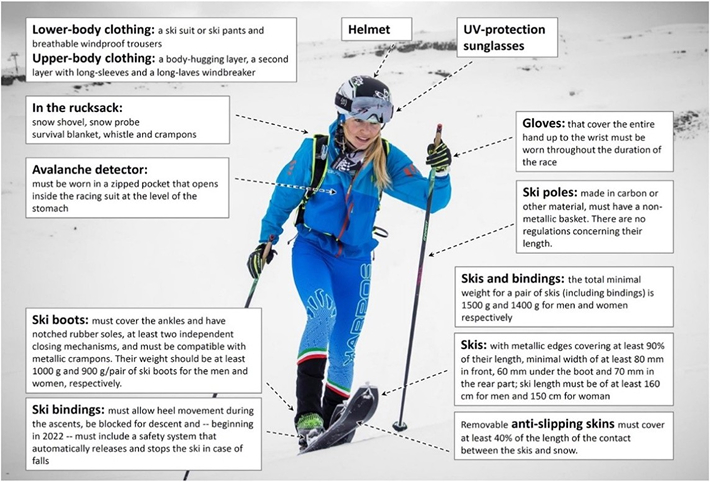
ISMF Ski Mountaineering competitions are usually based on the use of lightweight equipment, for which the ISMF has set rules and safety standards. Skis are light, so they don’t weigh the athlete down when they are strapped to the backpack, boots are made to be easy to wear both in ascent on skis, ascent on foot and while descending on skis with quick opening fastenings to adapt the boot to the right situation, bindings have to be able to switch between the uphill and the downhill necessities of the skier. In most races, athletes are required to wear a helmet, and some there is also the use of more technical equipment such as ice axes, harness, rope and crampons. All races require the use of skins, which are wide, self-sticking strips of synthetic fur, more like bristles where the hairs slightly dig into the snow as the skier ascends, therefore stopping the skier from sliding backwards.
This is a mini Individual race, combining the essential ski mountaineering features and techniques with an ascent on skins, part of the ascent on foot with skis on the rucksack and then a single descent from the top.
As the title implies, this is a very fast race, and is based on completing the total course in approximately 3 minutes for the fastest racers. The total ascent and descent is about 100m, with athletes starting and finishing in almost the same point. The first round is an individual qualification with athletes starting one after the other every 20 seconds, after the qualifying round athletes face each other in heats of 6.
Although the ascent is usually on well packed snow , the descent is supposed to be fun and can be off-piste, with gates and with small jumps.
The relay takes place in a team of 3 or 4 competitors, but with members of the team carrying out the ‘circuit’ one after the other, with each athlete racing once.
Again, this is quite a fast event, with each circuit lasting about 15 minutes, including 2 ascents and descents, and a short section with the skis on the rucksack. The total height gain is about 150 to 180m.
As the tile suggests, the vertical race is an uphill only event.
It is usually carried out on well packed snow with the whole race taking place with skins under the skis in a single, long ascent.
It is a race to the top and should not exceed a height gain of more than 700m.
This takes elements from the team race, but is based on the single individual athlete. Again, there will be at least 3 ascents and descents.
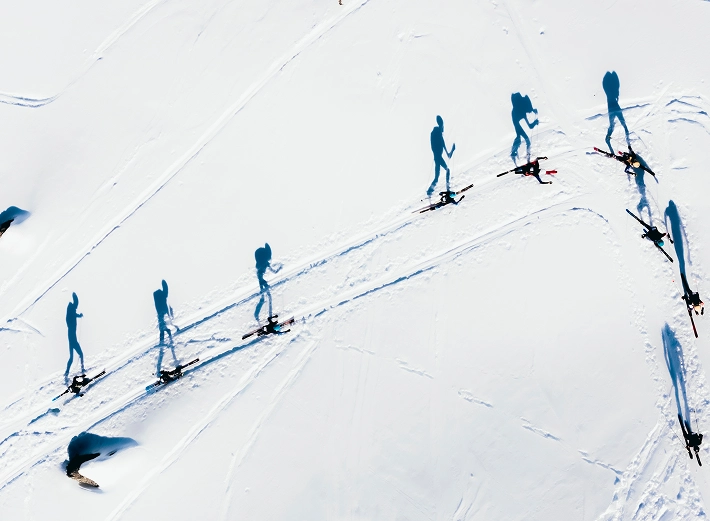
As with the team event, there will also be a section on foot with the skis carried on the rucksack, although some ISMF events no longer use harness and cord, they still might have to use crampons for steeper, icier ascents.
Races normally last from one and a half to two hours and cover a total hight gain of up to 1900m.
As with the team events, the race start is a mass start of all the athletes.
This is the most traditional form of the sport, with all early races being based on team events. Teams are comprised of two or three athletes, of the same sex and same age category for ISMF rankings. This is a spectacular event that takes the athletes to the mountain tops, and must include at least 3 ascents and descents. Long distance races include even more.
Races frequently transit the crests of mountains and athletes using a harness, cord, and crampons to ascend the most difficult couloirs. Descents are off-piste. A standard team race will last a maximum of 3 hours and cover a total height gain of around 2000m, whilst some long distance events may be based on much greater distances and over more than one day.
As with all ISMF events, safety is of utmost importance, and the tradition of facing the mountain as a team was originally based on the concept of crossing these awe inspiring environments in a safe way.
Core values are the fundamental beliefs upon which our activities and our behaviour are based. They are the guiding principles that we use to manage our internal affairs as well as our relationship with all external stakeholders. And they are a cornerstone for shaping a unique profile of the ISMF.
If these values shall become authentic, it will be important that leadership stands behind and everyone at the ISMF will be held responsible for them.
We are personally accountable
GUIDELINES
We advance the ski mountaineering sport
We do what we say, we own what we do
We preserve and advocate for the environment
We are respectful at any time
GUIDELINES
We respect people at any level
We respect the rules and promote fair play
We respect the mountains and their values
We innovate
GUIDELINES
We embrace and drive change
We encourage diverse perspectives
We are creative in the way we develop the sport
We promote quality of living through our sport
GUIDELINES
We promote a healthy life
We build community
We promote safety in the sport
We never compromise
GUIDELINES
We think big
We persevere against all obstacles
We are rigorous
Provide high quality international races:
in cooperation with national members, local and institutional partners and supporters.
Develop ski mountaineering worldwide:
More nations, more athletes, more youth engagement.
Foster a global ski mountaineering community:
through a unique digital services & communication platform.
The International Ski Mountaineering Federation (ISMF) is the global governing body of ski mountaineering, recognised by the International Olympic Committee since 2016. From its headquarters in Lausanne, Switzerland, the ISMF leads and supports a rapidly growing international community of athletes, organisers, and national member federations.
This document provides a clear overview of who we are — our mission, vision, and values — and how we work to strengthen ski mountaineering worldwide to ensure a sustainable and athlete-centred future within the Olympic Movement.
Sport Governance
Lorem ipsum dolor sit amet, consectetur adipiscing elit. Explore our organizational structure and leadership.
Sport Rules
Lorem ipsum dolor sit amet, consectetur adipiscing elit. Explore our organizational structure and leadership.
Antidoping
Lorem ipsum dolor sit amet, consectetur adipiscing elit. Explore our organizational structure and leadership.
Rules & Documents
Lorem ipsum dolor sit amet, consectetur adipiscing elit. Explore our organizational structure and leadership.
Annual Activity
Lorem ipsum dolor sit amet, consectetur adipiscing elit. Explore our organizational structure and leadership.